
Archives: 12/11/2025

Woodland Garden Design in North-Facing London Gardens: Canopy, Understorey, and Ground Layer

A north-facing garden in London is not a problem to be solved. It is a particular set of conditions to be understood – and, once understood, to be worked with rather than against. The instinct among many gardeners is to treat shade as a deficit: something to be reduced by cutting back, thinned out, or compensated for with the hardiest of sun-tolerant plants crammed into whatever light falls at the edges. The results of this approach are predictably disappointing. The more productive and far more rewarding alternative is to read the garden for what it is – a space that naturally replicates the ecology of the woodland floor – and to design accordingly. A well-executed woodland garden in a north-facing London plot can be among the most atmospheric, structurally interesting and ecologically productive garden types available to urban gardeners. The key is understanding the layered logic that underpins it.


Understanding the North-Facing London Garden

Light, soil and microclimate

A north-facing garden in an inner or outer London borough does not receive direct sunlight across most of its central area for the majority of the year. In the depths of winter, it may receive almost none. What it does receive – particularly in summer when the sun traces a higher arc – is indirect light: bright, diffused, consistent, and in the long evenings of June and July, more generous than many gardeners expect. The quality of this light is actually well suited to a broad range of plants; it is its quantity, and the direction it comes from, that shapes the design. Soil conditions in north-facing urban gardens tend toward the cooler and moister, particularly at the base of north-facing walls. Leaf litter, if allowed to accumulate and break down rather than being compulsively removed, builds a progressively richer leaf mould layer across the ground – exactly the soil type that woodland plants have evolved to exploit. The microclimate can be markedly sheltered, particularly in enclosed back gardens in Enfield’s Victorian terraces or the deeper plots of interwar semis in Palmers Green and Winchmore Hill. This shelter, combined with London’s urban heat island effect, extends the growing season and mitigates frost. Far from hostile, the north-facing London garden is a ready-made woodland habitat waiting for an appropriate planting framework.

Why woodland planting is the logical response

Natural woodland is itself a north-facing environment in one key sense: the ground beneath a tree canopy receives filtered, indirect light regardless of aspect. The plants that have evolved to thrive there – the shade-tolerant shrubs, the spring ephemerals, the ferns and groundcover perennials – are precisely the plants that succeed in a north-facing urban garden without the contrivances of raised beds, reflective surfaces or soil amendment programmes. Woodland garden design does not merely tolerate north aspect; in many respects it is native to it. The design approach draws on the structure of natural woodland – a canopy layer, an understorey of smaller trees and larger shrubs, and a ground layer of perennials, bulbs and low-growing cover – and applies that structure at the domestic scale. The effect, when the layers are chosen well and allowed to establish their relationships with each other over time, is a garden that feels not planted but composed: layered, coherent, and quietly alive through every season.


The Canopy Layer

Tree selection for restricted light and urban constraints

In a domestic garden, the canopy layer does not need to be extensive to be structurally effective. One or two well-chosen trees – placed to define the garden’s upper register, cast dappled rather than dense shade, and provide seasonal interest across their full height – are sufficient to anchor the design. For north-facing London gardens, the criteria for canopy selection are specific. The tree must tolerate, and ideally prefer, a position without direct midday sun. It must be suited to urban soils and the generally restricted root runs of residential plots. And it must earn its space across multiple seasons rather than offering a single moment of interest. Amelanchier lamarckii, the snowy mespilus, meets these criteria with considerable distinction: cloud-like white blossom in early spring, clean multi-stem form, reliable summer canopy, and autumn colour in warm tones of amber and orange that reads well even in low light. Acer palmatum cultivars – particularly the dissectum group – provide fine-textured, layered canopy at a scale that suits smaller plots, with autumn colour that ranges from pale gold to deep crimson depending on the selection. For larger gardens, Prunus padus, the bird cherry, offers generous early blossom, a light and airy crown structure, and strong ecological value for pollinators and birds. Cornus controversa ‘Variegata’, with its tiered horizontal branching and cream-edged foliage, provides architectural presence of a kind that few other small trees can match.

Working with existing trees

Many north-facing London gardens already contain mature trees – either within the plot itself or overhanging from neighbouring properties. These trees are frequently perceived as the cause of the shade problem rather than as the canopy framework of an opportunity. Reassessing an existing mature tree as the defining structural element of a woodland garden, rather than an obstacle to be managed down, often produces a conceptual shift that unlocks the whole design. The critical intervention is not removal or heavy reduction but selective crown lifting – raising the lower canopy to create clear height and allow light to reach the understorey layer below. Where a tree carries a Tree Preservation Order, this work requires appropriate consent from the local planning authority; in Enfield, the council’s tree officer can advise on the scope of permissible work. The result of thoughtful crown lifting is a garden that gains height, drama and a sense of genuine woodland character without losing the mature specimen that creates them.


The Understorey Layer

Shrubs and small trees for dappled shade

The understorey is the most complex and, in many ways, the most interesting layer of the woodland garden. It occupies the space between the canopy and the ground – roughly the zone from one metre to four metres in height – and it is where much of the seasonal detail and structural variety of the planting resides. In a north-facing London garden, the understorey needs to perform across a long period, providing structure in winter, flower and fragrance in spring, and foliar interest through the summer months.

Hydrangea aspera and its cultivars are outstanding choices for this layer: large, architectural leaves, flat-headed lacecap flowers in subtle combinations of lilac and cream, and an unfussy disposition in cool, moist shade. Viburnum davidii provides dense, low evergreen structure at the front of the understorey with corrugated dark foliage and, where male and female plants are grown together, intense metallic-blue berries in autumn and winter. Mahonia japonica offers something genuinely valuable in the darkest months – fragrant yellow flower racemes from November through to February, held above bold, spine-edged pinnate leaves that give the plant a prehistoric quality perfectly suited to a shaded, atmospheric setting. Sarcococca confusa, the sweet box, is a more modest but invaluable understorey plant for positions of deep shade near paths or seating areas, where its remarkable winter fragrance – produced by tiny white flowers almost invisible without close inspection – can be appreciated at close range. For height and drama, Sambucus nigra cultivars, particularly the deeply cut, near-black foliage forms such as ‘Black Lace’, bring a richness of texture to the shadier reaches of the understorey that few other shrubs can rival.


The Ground Layer

Shade-tolerant perennials and groundcover

The ground layer is where the woodland garden earns its ecological credentials and much of its visual richness. In a north-facing London plot, the ambition should be to cover the ground almost entirely with living planting – suppressing weeds by occupation rather than intervention and creating the seamless, densely planted floor that distinguishes a well-designed woodland garden from a collection of isolated specimens in bare soil.

Geranium macrorrhizum is perhaps the single most reliable groundcover perennial for difficult shade, forming dense, semi-evergreen mats of scented foliage with pink flowers in early summer and reliable autumn colour. Epimedium, in its many species and hybrids, is similarly invaluable – drought-tolerant once established, producing delicate flowers in yellow, white, pink or deep purple in early spring before the foliage canopy closes overhead. Pulmonaria cultivars bring early-season colour and the lungwort’s characteristic silver-spotted leaves provide interest from early spring well into autumn. Polygonatum multiflorum, Solomon’s seal, is one of the great classic woodland perennials – arching stems hung with pendant white bells in late spring, giving way to a clean architectural presence through the summer before the foliage turns soft gold before dying back. For evergreen winter structure at ground level, Pachysandra terminalis and the native Asarum europaeum – with its glossy, kidney-shaped leaves – both perform reliably in the deep shade beneath established canopy.

Bulbs and seasonal ephemerals

The temporal dimension of the woodland garden is largely managed through its bulb and ephemeral layer. Before the canopy leafs out in spring and the understorey shrubs close ranks, the ground layer receives its most generous light of the year – and the plants that have evolved to exploit this window of opportunity are among the most beautiful in the temperate flora. Erythronium dens-canis, the dog’s tooth violet, naturalises readily in leaf-mould-rich soil and produces nodding flowers in shades from white to deep rose in March and April. Anemone nemorosa, the wood anemone, spreads slowly but steadily through the right conditions, carpeting the ground in starry white flowers before retreating underground by midsummer. Narcissus cyclamineus cultivars – smaller, more graceful and better suited to naturalising in shade than large-flowered hybrids – bring reliable early-spring colour without the brash quality that can feel out of place in a woodland setting. Cyclamen hederifolium completes the seasonal cycle at the opposite end of the year, flowering in soft pink or white in August and September before producing its intricately marbled foliage through the winter months.


Bringing It Together: Structure, Succession and Seasonality

Designing across time and layer

The defining quality of a well-designed woodland garden is the sense that it has not been arranged but has arrived at its own coherence through the relationships between its layers. This quality does not emerge immediately after planting, and designing for it requires thinking across several years rather than a single season. The canopy must be in place – or at least established in framework – before the understorey can be positioned in relation to the patterns of shade it creates. The understorey must be sufficiently established to produce the filtered light that shade-tolerant ground layer plants prefer before those plants are introduced at scale. The bulb and ephemeral layer is planted last, threaded through the emerging ground layer to fill the temporal gaps left by deciduous perennials.

Succession also means accepting that the garden will change. As the canopy matures and shade deepens, certain plants at the ground layer will need to give way to others more tolerant of lower light. This is not failure but ecology – the garden moving through its own natural successional sequence. Designing with this trajectory in mind, rather than against it, is the mark of a gardener who understands the woodland model at its most fundamental level.


Conclusion

A north-facing London garden, approached with the logic of woodland design, does not need to be reconciled with its limitations. It needs to be recognised for what it already is – a canopied, sheltered, moisture-retentive environment with the structural and ecological conditions to support some of the most beautiful and interesting plants in the temperate gardening palette. The three-layer framework of canopy, understorey and ground layer is not an abstract design principle: it is the organisational logic of the natural world, scaled down to a domestic plot and allowed to perform.

How a Qualified Tree Pathologist Diagnoses Internal Decay Using Resistograph Drilling

A tree can appear entirely healthy from the outside while carrying advanced structural decay within its trunk. The bark is intact, the canopy is full, and to any casual observer – and to many unqualified operators – there is no visible cause for concern. It is precisely this gap between external appearance and internal condition that makes the assessment of structural integrity one of the most technically demanding disciplines in professional arboriculture. Resistograph drilling is one of the most valuable tools available for bridging that gap. In the hands of a qualified tree pathologist, it can reveal with considerable precision what no visual survey, however thorough, is able to confirm: the presence, extent and distribution of internal decay within a living tree.


What Is Internal Decay and Why Is It So Difficult to Detect?

The invisible threat inside a living tree

Wood decay in trees is caused primarily by fungi – organisms that colonise woody tissue and break down either the cellulose and hemicellulose of the cell walls (white rot) or the lignin that gives wood its structural rigidity (brown rot). Both processes compromise the mechanical properties of the affected wood, reducing the load-bearing capacity of the trunk or branch in which they are active. The critical point, and the one that makes internal decay so hazardous, is that fungal colonisation typically progresses from the inside outward. A tree’s outermost layers – the sapwood, the cambium, the bark – may remain functionally intact long after the heartwood at the core has been significantly degraded. The tree continues to grow, continues to produce foliage, and continues to look, from the pavement or the garden fence, like a healthy specimen.

Why visual inspection alone is not enough

A competent visual tree assessment, carried out in accordance with the methodology set out in the Arboricultural Association’s guidance and informed by BS 5837:2012, remains the essential first stage of any tree survey. An experienced arborist conducting a ground-level survey will note crown condition, basal decay indicators, fungal fruiting bodies, cracks, bark anomalies and evidence of previous damage – all of which inform the probability of internal problems. But visual assessment has a ceiling. The absence of visible decay indicators does not confirm structural integrity; it confirms only that structural compromise is not yet expressed externally. Where a visual survey raises concern, or where a tree’s location and consequence of failure demand a higher standard of confidence, advanced diagnostic tools become necessary. This is where resistograph drilling enters the process.


What Is a Resistograph and How Does It Work?

The mechanics of resistance drilling

The resistograph is a device that measures the mechanical resistance encountered by a thin, rotating drill needle as it is driven through wood at a controlled, constant feed rate. The needle – typically between 1.5 and 3 millimetres in diameter – is fine enough to cause negligible harm to the tree when used correctly, and is inserted at a predetermined depth appropriate to the diameter of the stem being assessed. As the needle advances, the instrument records the resistance it encounters at each point along its path. Sound, dense wood offers high resistance. Degraded wood – softened by fungal activity, dried out by brown rot, or hollowed by advanced decay – offers significantly less. The instrument plots this data in real time as a resistance profile: a continuous trace, printed or stored digitally, that maps the internal condition of the wood column along the drill path.

Reading the trace: what the data shows

The resistance profile produced by a resistograph is not a photograph of the interior of a tree – it requires trained interpretation to extract meaningful structural information. In sound wood, the trace shows a consistently high, relatively stable resistance reading throughout the measured depth. A sharp, sustained drop in resistance at any point along the trace indicates a transition to degraded or absent wood – a void, a column of decay, or a region of advanced softening caused by fungal activity. The precise character of the drop matters: a gradual decline can indicate progressive softening through a decay column, while an abrupt fall to near-zero resistance typically suggests a cavity. The position of the anomaly within the cross-section – central, eccentric, or close to the surface – informs the assessment of residual wall thickness, which is the key variable in any biomechanical appraisal of the tree’s structural condition.


The Role of the Qualified Tree Pathologist

Selecting drill positions and interpreting results

The resistograph produces data; the qualified tree pathologist provides the judgement necessary to collect that data meaningfully and interpret it correctly. The selection of drill positions is not arbitrary. A single drill path through a trunk provides a one-dimensional profile along one diameter. Because decay columns are rarely perfectly circular or centrally distributed, a single reading can either overstate or understate the extent of internal compromise. An experienced pathologist will select multiple drill positions – typically at different heights on the stem and at different horizontal angles – to build a three-dimensional picture of the decay pattern. The positions are chosen on the basis of prior visual observations: the location of fungal brackets, the presence of cracks or bulges, the suspected entry points of the original infection, and the structural zones most relevant to the tree’s mechanical loading. Without this contextual reasoning, the data produced by the instrument is of limited diagnostic value.

Interpreting the resulting traces requires familiarity with the decay patterns associated with specific fungal species, an understanding of the CODIT model and how trees compartmentalise infection, and experience in relating resistograph profiles to the structural behaviour of wood under load. The Mattheck and Breloer residual wall thickness formula – which suggests that a tree with a ratio of residual wall thickness to overall stem radius below approximately 0.3 carries significantly elevated risk of stem failure – is one widely applied reference point in this analysis, though it is a starting position for assessment rather than a definitive threshold applied in isolation.

Combining resistograph data with other diagnostic tools

Resistograph drilling is most valuable when it forms part of an integrated diagnostic approach rather than a standalone test. In practice, a qualified tree pathologist working on a complex case in North London – assessing, for example, a large veteran oak in Forty Hall or a mature London plane in a conservation area in Enfield Town – will typically combine resistograph data with several other sources of information. Sonic tomography, which maps internal structure by measuring the velocity of sound waves transmitted through the cross-section of a stem, can provide a two-dimensional image of the internal condition across the full diameter without drilling. Used alongside resistograph traces, it allows the pathologist to cross-reference findings and identify the spatial distribution of decay with considerably greater confidence. Fractometer testing – which measures the breaking angle of a small wood sample extracted during drilling – can provide additional data on the mechanical properties of the wood at the affected site. Fungal identification, whether through visual recognition of fruiting bodies or laboratory analysis of tissue samples, informs the prognosis: different fungal species degrade wood at different rates and in different patterns, and knowing which organism is driving the decay matters for predicting how the condition will progress.


What Happens After the Diagnosis?

From data to decision

A resistograph assessment does not produce a binary verdict of safe or unsafe. It produces a body of evidence that a qualified pathologist uses to assign the tree to a risk category and to formulate a management recommendation. That recommendation might be that the tree presents no significant structural concern beyond normal monitoring intervals. It might be that a programme of regular reassessment is warranted, with retesting at defined intervals to track the progression of decay. It might be that specific structural interventions – the installation of a dynamic bracing system, the removal of a particularly affected co-dominant stem, or a targeted crown reduction to reduce the wind load on a compromised trunk – are advisable. In cases where the ratio of sound to degraded wood falls below acceptable thresholds, and where the consequences of failure are significant, the recommendation may be for removal. What distinguishes a properly conducted resistograph assessment from a rough judgement call is the quality and traceability of the evidence on which that recommendation rests.

The Enfield context: why accurate diagnosis matters here

The urban forest of the London Borough of Enfield presents a particular set of circumstances that make advanced diagnostic assessment not merely desirable but frequently essential. The borough contains some of the most mature tree stock in Outer London – veteran trees within ancient parkland at sites such as Trent Park and the Enfield Chase remnants, large street trees along residential corridors in Palmers Green, Winchmore Hill and Edmonton, and privately owned trees in gardens whose scale reflects generations of uninterrupted growth. Many of these trees carry Tree Preservation Orders. Others sit within conservation areas where the presumption is strongly in favour of retention. Removing a significant tree on the basis of a suspected but unconfirmed structural problem is not straightforward legally, and nor should it be. Conversely, retaining a tree that is carrying advanced internal decay in a location where failure would have serious consequences for people or property is not an acceptable position either. The resistograph, properly deployed and correctly interpreted by a qualified pathologist, provides the evidential foundation that allows decisions about trees in these settings to be made on the basis of what is actually inside them – not on the basis of what can or cannot be seen from the outside.


Conclusion

The resistograph is not a magic instrument, and no reputable pathologist would present it as one. It is a precision diagnostic tool that, in experienced hands, substantially closes the gap between what a tree shows on its surface and what is happening within its structure. In a borough like Enfield, where the stakes attached to tree management decisions – legal, financial, ecological and human – are considerable, the difference between a professional diagnosis and an educated guess is not a small one. Accurate internal assessment is the basis on which sound tree management is built, and it is one of the clearest illustrations of why the qualifications and experience of the person assessing a tree matter as much as the equipment they are carrying.


Why Topping a Tree Is Considered Malpractice by Certified UK Arborists

Tree topping is not a grey area. Among certified arborists in the United Kingdom, it is not a technique that attracts debate or divides professional opinion – it is simply condemned. The Arboricultural Association, which sets the professional standards for tree care across Britain, treats topping as fundamentally incompatible with good arboricultural practice. And yet, it remains one of the most commonly requested tree operations by homeowners, and one of the most frequently carried out by unqualified operators who present themselves as tree surgeons. In areas like Enfield, Palmers Green and Winchmore Hill – where mature trees line residential streets, overhang gardens and sometimes fall within or near conservation areas – the consequences of this gap between public expectation and professional knowledge can be severe and long-lasting.


What Exactly Is Tree Topping – And Why Do People Ask for It?

Defining the practice

Tree topping goes by several names – hat-racking, heading, rounding over – but the definition is consistent: the indiscriminate removal of large portions of the crown by cutting the main structural branches or the central leader back to blunt stubs, with no regard for where those cuts are made in relation to the tree’s natural architecture. This is what distinguishes topping from legitimate crown reduction or the traditional practice of pollarding. A properly executed crown reduction removes branches back to a suitable secondary lateral – one large enough to assume the terminal role, sustain itself, and allow the wound to be compartmentalised over time. Pollarding, when applied to the right species at the right stage of its development, is a managed regime that the tree can sustain across decades. Topping is neither of these things. It is defined not by how much is removed but by the absence of biological logic in how the cuts are made.

The homeowner’s perspective

It is worth acknowledging, without condescension, why topping gets requested so often. A tree can genuinely feel too large for its setting. It may cast shade over a garden that its owners want to use. A neighbour may have raised concerns. Following a period of storms, it may look imposing in ways that feel threatening. In the dense residential neighbourhoods of North London – where Victorian and Edwardian houses sit beneath trees that have had a century to mature – these concerns are entirely legitimate. The difficulty is not the concern itself, but the proposed solution. Topping feels decisive: it takes a large tree and makes it visibly smaller, quickly. What it does not do is address the underlying problem in any sustainable or safe way. Every legitimate concern that leads a homeowner to request topping has a proper arboricultural answer – topping simply is not it.


The Biological Case Against Topping

How trees respond to topping – and why it makes things worse

A tree that has been topped does not accept its reduced state. It responds to the stress of large, poorly placed wounds by producing epicormic growth – clusters of fast-growing shoots that burst from latent buds just beneath the cut sites. This is a survival mechanism, not a sign of recovery. These shoots grow at a rate far exceeding that of the tree’s normal growth, and they do so with one purpose: to restore the leaf canopy the tree needs to photosynthesise and survive. The result, typically within three to five years, is a tree that has returned to something close to its original volume – but which now carries that volume on structurally compromised growth. The homeowner who topped their tree to reduce its size has, in effect, created a larger future problem in exchange for a few years of temporary reduction. The irony is not lost on any arborist who is called to assess a tree that was topped a decade ago.

The wound that never heals

The science of how trees respond to wounding is well established through the CODIT model – Compartmentalisation of Decay in Trees – developed through decades of arboricultural research. When a tree is pruned correctly, to a living lateral branch of adequate size, it can activate its natural defence mechanisms and progressively seal the wound. When a tree is topped, the cuts are made through the middle of structural stems where no such lateral exists. The resulting stubs cannot be compartmentalised effectively. They die back. The exposed wood becomes a chronic point of entry for decay fungi, wood-boring insects and bacterial pathogens. The decay that follows is often invisible from the outside for years, silently progressing through the heartwood while the tree continues to produce its epicormic regrowth above. By the time the structural damage is apparent, it is frequently advanced.


Structural Failure, Liability and the Law

Why topped trees become hazard trees

The through-line from biological damage to physical danger is direct. Epicormic shoots – the dense, fast-growing regrowth produced in the aftermath of topping – are attached only to the outer layers of wood at the cut site. They are not integrated into the tree’s structural architecture in the way that normally developed branches are. Under load – in high winds, under the weight of wet snow, or simply as their own increasing weight acts on their poor attachment points – these shoots are highly prone to failure. A tree that was topped because a homeowner considered it a risk has, through the process of topping, become measurably more dangerous. This is not a theoretical concern. It is why BS 3998:2010, the British Standard for tree work, stipulates that pruning cuts must be made to a suitable growing point, and why topping categorically fails to meet its requirements for acceptable practice.

Legal exposure for property owners and contractors

The liability implications of tree topping are real and worth understanding clearly. If a topped tree subsequently fails – dropping a branch, losing a limb, or suffering a more catastrophic structural failure – and that failure causes injury or damage to property, both the contractor who carried out the work and the landowner who commissioned it may face civil liability. The history of work carried out on a tree is not difficult to establish. An arboricultural expert witness can identify topping cuts, estimate when they were made, and connect them to subsequent structural failure with considerable precision. In Enfield and across the London Borough of Enfield more broadly, there is an additional legal dimension: a significant number of trees in residential and semi-urban settings carry Tree Preservation Orders, or sit within conservation areas where consent is required before any work begins. Carrying out unauthorised topping on a protected tree can result in enforcement action from the Local Planning Authority, and the penalties – including unlimited fines for the most serious cases – are not nominal.


Why This Is Malpractice in the Eyes of the Profession

The Arboricultural Association’s position

The Arboricultural Association is explicit. Topping is classified as poor practice, and no contractor holding AA Approved Contractor status, no Registered Consultant, and no member in good standing would carry it out or recommend it. This matters practically for anyone in North London seeking tree surgery services. The AA Approved Contractor scheme is not a rubber stamp – it involves independently assessed audits of work quality, equipment, insurance, and professional standards. When a homeowner or property manager chooses an AA-approved arborist, they are selecting from a pool of operators who have been independently verified against professional benchmarks. The presence or absence of that credential is a meaningful signal, not a formality.

The reputational and ethical dimension

For a certified arborist, agreeing to top a tree is not simply a technical error. It is an ethical failure – a choice to prioritise the revenue from a single job over the long-term welfare of the tree, the safety of the client, and the integrity of the profession. The analogy to other regulated professions is instructive. A solicitor who knowingly advises a course of action they understand to be harmful to their client has not merely made a mistake – they have violated the terms of their professional relationship. The same logic applies in arboriculture. A certified tree surgeon who tops a tree because a client insists upon it has not satisfied their professional obligation; they have abandoned it.


What Responsible Tree Surgery Looks Like Instead

Crown reduction and crown lifting – the legitimate alternatives

The concerns that lead homeowners to request topping – a tree that feels oversized, one that limits light, one that seems unstable – are all addressable through legitimate arboricultural techniques. Crown reduction, properly executed, reduces the overall volume of a tree by cutting back to suitable laterals throughout the canopy, maintaining the tree’s natural form and keeping individual wounds within a size the tree can manage. Crown lifting – removing or raising the lower branches – improves clearance and light penetration without touching the upper structure at all. These are not approximations of topping; they are entirely different operations that require genuine knowledge of species-specific responses, wound physiology and structural assessment. The skill involved is considerable, and the results – when the work is done well – address the homeowner’s concern while extending rather than shortening the tree’s safe useful life.

Working with the tree’s long-term future in mind

Good arboriculture is stewardship across decades, not intervention measured in a single afternoon. The trees that line roads through Enfield, Edmonton and Southgate – many of them mature London planes, pedunculate oaks, common limes and sweet chestnuts – represent generations of growth that cannot be replicated quickly. They contribute to air quality, urban cooling, biodiversity and the character of the neighbourhoods they inhabit. Responsible tree surgery exists to extend their safe presence in those landscapes. Topping shortens it – introducing decay, compromising structure, and setting in motion a cycle of regrowth and re-cutting that gradually hollows out a tree that might otherwise have stood safely for another half-century. A skilled arborist’s role is to find the solution that serves the client’s genuine needs and the tree’s biological reality at the same time. Those two things are, in almost every case, compatible – but only when the work is carried out by someone qualified to understand both.


Conclusion

If a contractor offers to top your tree, that offer is itself the answer to the question of whether you should hire them. It signals either an absence of relevant training or a willingness to carry out work they know to be harmful – neither of which belongs near a mature tree. The standard exists, the professional bodies are clear, and the biological and legal consequences of ignoring both are well documented. Seeking an Arboricultural Association-approved professional and asking the right questions before any work begins is not overcaution – it is the minimum a tree, and the people around it, deserve.


How To Keep Dangerous Insects Away From Your Garden

Anyone who’s spent time in their garden knows that insects come with the territory. While many bugs are beneficial, some can be downright dangerous. Not only can they harm your plants, but certain insects also pose a risk to your health. Think of mosquitoes carrying diseases like West Nile virus, or wasps with their painful stings. Some insects, like ants, might cause damage to the structure of your garden, and spiders, while generally harmless, can be a cause for concern if they’re of the venomous variety.

So, how do we keep our green spaces safe and enjoyable? The answer lies in prevention and vigilance. A well-maintained garden is one that discourages harmful pests from settling in. In this article, I’ll walk you through how to identify the dangerous bugs in your garden and, more importantly, how to keep them away—naturally or with the occasional chemical solution when needed.

Identifying Dangerous Insects

Before we can deal with pesky insects, we need to know which ones are a real threat. The garden is home to a wide range of insects, but some of them can be harmful to plants or people. Here’s a look at a few common offenders:

Mosquitoes

Mosquitoes are notorious for their itchy bites, but their real danger lies in the diseases they can spread. In the UK, mosquitoes are mostly a nuisance, but they can still carry diseases like the West Nile virus, especially during warmer months. They love standing water, which is why it’s crucial to eliminate any puddles or water-filled containers from your garden.

Wasps and Bees

Wasps are more aggressive than bees, and their sting can cause severe reactions in those who are allergic. Bees, while vital pollinators, can also sting if provoked. Identifying these insects is simple: wasps are usually slender and smooth, while bees are rounder and covered in hair. If you find a nest in your garden, it’s best to leave it alone unless it’s posing a risk.

Ants

Ants might seem harmless, but certain species can be a real nuisance. The red imported fire ant, for example, can cause painful stings and even infest your home. Keep an eye out for ant hills, especially near the base of trees and shrubs, as these pests often build their nests there.

Spiders

Most spiders you’ll encounter in the UK are harmless, but there are a few, like the false widow, that can deliver a nasty bite. While spiders tend to keep other insects in check, it’s still important to make sure you’re not attracting dangerous varieties by leaving clutter or old wood piles around your garden.

Knowing what these insects look like and understanding their behaviour is the first step in keeping your garden safe. Now that we know what to look out for, let’s explore how to keep them away.

Preventing Insects Naturally – Eco-Friendly Methods

There’s no need to turn to chemicals as the first line of defence when dealing with dangerous insects. The natural world offers plenty of options for keeping pests at bay, and many of them are simple, effective, and eco-friendly.

Planting Insect-Repellent Plants

Certain plants act as natural insect repellents, and they’re an excellent way to protect your garden without using harmful chemicals. For example, lavender is well-known for its ability to repel mosquitoes, while marigolds can deter aphids. Citronella plants are another fantastic option to keep mosquitoes at bay, and their fragrant leaves also make them a pleasant addition to your garden.

Companion Planting

If you want to get a bit more strategic, consider companion planting. This involves planting specific plants next to each other that naturally repel pests. For instance, basil planted near tomatoes helps keep mosquitoes and flies away. Likewise, garlic and onions planted near carrots can help protect them from aphids.

Encouraging Beneficial Insects

Instead of trying to eliminate all insects from your garden, why not invite some good ones in? Ladybugs are natural predators of aphids, and their bright colours make them easy to spot. Likewise, spiders, while some people might be wary of them, are fantastic for controlling insect populations in your garden. Encourage these helpful insects by creating a diverse, healthy garden ecosystem.

Using Essential Oils

Essential oils are another effective way to repel insects naturally. Mosquitoes are particularly put off by oils like citronella, eucalyptus, and peppermint. You can create a homemade insect repellent spray by mixing essential oils with water in a spray bottle, or even use oil diffusers around your outdoor space. Not only does this keep insects away, but it also leaves your garden smelling lovely!

Water Management

Standing water is a major attraction for mosquitoes, so it’s essential to manage water properly in your garden. Empty any water-filled containers, like plant pots or birdbaths, and ensure that your garden has good drainage. If you have ponds, consider using a fountain or aerator to keep the water moving, as mosquitoes prefer stagnant water for breeding.

Chemical Solutions – When and How to Use Them

While natural solutions are often effective, sometimes you may need to turn to chemicals to get the job done. When using chemical treatments, it’s crucial to choose safe options that target the pests without harming the environment or your plants.

Organic Pesticides

Organic pesticides are often a safer choice compared to traditional chemical insecticides. These products are made from natural ingredients and are generally less harmful to the environment. Look for ones that target specific pests, like neem oil for aphids or insecticidal soap for soft-bodied insects. These are effective and have fewer side effects on beneficial insects like bees.

Insecticidal Soap

Insecticidal soap is another option that’s both safe and effective. It works by suffocating insects and is particularly useful for soft-bodied pests like aphids, mealybugs, and spider mites. It’s a gentle but effective option, especially for those who want to avoid harsh chemicals in their garden.

When to Call in Professionals

Sometimes, an infestation can get out of hand, and it’s best to call in the professionals. If you find that your garden is overrun with pests like ants or wasps, and natural methods just aren’t working, it’s time to bring in pest control experts. They’ll have the tools and experience to deal with even the most stubborn infestations safely and efficiently.

Maintaining Your Garden to Prevent Insect Infestations

Prevention is always better than cure, and regular garden maintenance can make all the difference in keeping dangerous insects at bay.

Cleaning Up Garden Debris

Garden debris, like fallen leaves, dead plants, and rotting wood, provide an ideal hiding spot for pests. Make sure to regularly clear your garden of any unwanted debris, especially in the autumn when the ground is covered with leaves. Composting organic material is a great way to recycle garden waste, but ensure your compost pile is well-managed to avoid attracting pests.

Trimming Overgrown Plants

Overgrown plants create an ideal environment for insects to thrive. Keep your shrubs and trees well-trimmed, and remove any dead or diseased branches. Not only does this help reduce the risk of pests, but it also promotes the healthy growth of your plants.

Proper Drainage

A garden with poor drainage is a perfect breeding ground for mosquitoes. If you notice areas in your garden where water tends to pool, take steps to improve drainage. This might involve creating raised beds, installing drainage pipes, or simply repositioning containers and planters.

Using Mulch Properly

Mulch is great for retaining moisture and keeping your plants healthy, but too much of it can attract insects. Use mulch sparingly, and ensure that it doesn’t build up around the base of your plants. This helps to prevent excess moisture, which can attract pests like ants and termites.

Conclusion – A Safe, Pest-Free Garden

Keeping dangerous insects away from your garden doesn’t have to be a complicated task. By implementing a combination of natural prevention methods and using chemicals sparingly when needed, you can create a safe, pest-free environment for both your plants and your family. Remember, regular maintenance and vigilance are key. Whether it’s planting insect-repellent plants, managing water, or calling in a professional when necessary, the effort will pay off in the form of a healthier, more enjoyable garden. Stay proactive, and your garden will remain a beautiful, safe place to relax and unwind.


How To Protect Your Fruit Trees From Late-spring Frosts

A Chilly Lesson From My Garden Shed

I’ll never forget the morning I lost my cherry crop to a sneaky frost. It was mid-May. I’d just bragged to a neighbour that my Stella cherry tree had never looked better—blossoms everywhere, bees buzzing, and the faintest hint of fruit setting in. I felt like a proud parent.

Then came that cold, clear night. I didn’t check the forecast. I didn’t throw a fleece over the tree. I didn’t even glance out the window.

By breakfast, the flowers were brown and limp. That sickly, singed look you only get from frost. No cherries that year. Just a bruised ego and a few good lessons.

Since then, I’ve kept a close eye on the weather, and I’ve helped dozens of clients across London do the same. Frost in late spring doesn’t care how hard you’ve worked all winter. One cold snap and your fruit dreams can vanish overnight. But it doesn’t have to be that way.

This guide will walk you through the why, where, when, and how of frost protection. Whether you’ve got a small tree in a pot or a row of plums down the allotment, you’ll find something useful here.


Why Late-spring Frosts Are So Damaging

Understanding the Critical Growth Stages

Fruit trees are hardy in winter. When they’re dormant, they can handle freezing temperatures with ease. But spring is a different story. As soon as buds start to swell and blossoms appear, trees lose their cold resistance.

Each stage of development is more delicate than the last. Buds can survive light frost. Blossoms, however, are extremely sensitive. Just one chilly night below -2°C can destroy them. And young fruit, still soft and forming, is no tougher.

This is why that one rogue frost in April or May does far more damage than anything in December or January.

Why It’s Worse in Spring Than in Winter

In winter, trees are asleep. Their tissues are protected. Come spring, they wake up—and with that comes risk.

Spring frosts follow warm spells. The tree thinks the coast is clear and starts to grow. Then the cold hits, catching it off guard. It’s not just the flowers either. Leaves, twigs, and even developing wood can be affected if the frost is strong enough.


Know Your Frost Risk – Garden Geography Matters

Frost Pockets – Is Your Garden a Trap?

Cold air behaves like water. It flows downhill and pools in low spots. If your garden sits in a dip or is surrounded by walls or fences, it might trap cold air overnight.

This is what we call a frost pocket. You might notice frost on your lawn when your neighbour’s a few doors down have none. That’s the microclimate effect.

If you’re keen, try dusting flour across your garden at dusk before a predicted frost. In the morning, you’ll see where it settled thickest—that’s your coldest zone.

London Isn’t Immune – Urban Myths About the “Heat Island”

London’s famous for being a few degrees warmer than the countryside. But don’t let that fool you. I’ve seen apple blossoms freeze in Camden and fig buds shrivel in Lewisham.

In 2023, I worked on an apricot tree in Chiswick. Beautiful spot, well protected, right up against a brick wall. Still, a freak frost in early May burned off every single flower. The client had never seen it happen before. Neither had I—in that spot.

So yes, cities are warmer, but local frost pockets still happen.

Keep Records – A Gardener’s Frost Diary

If you’ve had frost hit you once in May, it can hit you again. Keep a simple log—dates, temperatures, tree stages, what survived, what didn’t.

It doesn’t have to be fancy. A notebook in the shed or a note on your phone will do. You’ll start spotting patterns. That’s half the battle won.


Timing Is Everything – How To Predict a Late Frost

Reading the Weather Like an Arborist

Frost doesn’t usually announce itself. But there are warning signs.

If the day’s been warm, the sky is clear, and the wind drops—brace yourself. That’s a classic setup. Warm air rises, heat escapes, and cold air settles.

Late frosts tend to strike just before dawn. That’s when the temperature hits its lowest.

Useful Tools – Forecast Apps and Thermometers

The Met Office app is a good place to start. Look for “feels like” temps, not just the air temperature. Calm, dry nights with single-digit lows are your cue.

A simple garden thermometer placed at blossom level (roughly 1–1.5 metres up) gives a better picture than anything on your phone.

The Critical Temperature Thresholds

Here’s a quick guide to damage risks:

Fruit TypeBlossom Damage Starts At
Apples-2°C
Plums-1.5°C
Cherries-2.5°C
Pears-2°C
Peaches/Apricots-1°C

Protective Strategies – How To Shield Your Fruit Trees

Fleece, Sheets, and Tents – Budget-friendly Covers

Old bed sheets, horticultural fleece, even bubble wrap in a pinch—anything that traps warm air helps.

Drape it loosely so it touches the ground, creating a mini greenhouse. Use bamboo canes or stakes to stop it flattening your flowers.

Put covers on before dusk and take them off by mid-morning. You don’t want to cook the buds in late sun.

Watering for Warmth – Why Wet Soil Retains Heat

Wet soil holds heat better than dry soil. Watering the day before a frost can make a small but real difference. It works best with mulch—compost, bark, or straw keeps the warmth in.

Don’t water during a freeze. That’s counterproductive and can make things worse.

Wind Machines, Heaters, and Candles – For the Serious Grower

If you’re growing fruit commercially or just take it very seriously, there are more advanced methods.

Orchardists use paraffin candles, orchard heaters, and even wind turbines to circulate warm air. These can be adapted on a small scale with garden-safe heaters or even outdoor fairy lights (the non-LED kind—they give off a bit of heat).

But these need watching. Never leave heaters unattended.

Don’t Forget Pruning

Good pruning keeps trees healthy and balanced. It also means fewer crowded branches and more airflow—less frost damage risk.

It’s not about hacking back. Just tidy structure and removal of unnecessary growth. A well-pruned tree dries and warms faster.


What To Do If Frost Strikes Anyway

Assess the Damage

You’ll know if it’s hit. Blossoms turn black or brown. Fruitlets stop growing and drop. Leaves may look scorched.

Don’t panic. Wait a few days. Sometimes what looks dead isn’t.

Supportive Care After Frost

Don’t rush to prune frost-bitten areas. They may protect the parts underneath from a second frost. Let the damage show fully before cutting.

Keep the tree well-watered. A light feed (seaweed or balanced liquid fertiliser) can help recovery.

Hold off on any major work until you’re sure the tree’s settled again.

Secondary Blossoms – A Second Chance?

Some trees send out a second round of flowers. Apples and plums are good at this, though the crop will likely be smaller.

Bees are key. Keep an eye out for pollinators. If they’re still visiting, you’ve still got hope.


Long-term Planning – How To Future-proof Your Orchard

Choosing Late-blooming Cultivars

Some trees flower later and dodge most frosts. For apples, ‘Sunset’, ‘Fiesta’, and ‘Bramley’s Seedling’ bloom late. ‘Czar’ and ‘Blue Tit’ are good plum options.

Late bloomers may need longer summers to ripen properly, so pick what suits your patch.

Smart Placement in Your Garden

Planting near a south-facing brick wall can work wonders. Walls absorb heat during the day and release it at night.

Avoid low ground and frost pockets. Raised beds or gentle slopes help. Windbreaks from hedges or mesh can also reduce cold wind exposure.

Training Forms That Help

Fans, espaliers, and cordons give you control. You can train them along warm surfaces and prune precisely. That means fewer blossoms at risk and quicker frost recovery.


Final Thoughts From the Garden Bench

Protecting fruit trees from frost is part weather watching, part common sense, and part luck. Even the most experienced gardener gets caught out now and then—I still do.

That late frost that took my cherry tree down in 2019 was a pain. But it also taught me to respect the weather more than I did before.

Since then, I’ve covered more trees, read more forecasts, and watched more dawns than I care to admit. But I’ve also eaten a lot more fruit.

Trees bounce back. So do we. Give them the right care and attention, and they’ll reward you—maybe not this year, but the next.


What Trees To Plant Depending On The Size Of Your Garden

If you have a small garden, compact ornamental or fruit trees are your best bet. Medium-sized gardens can accommodate larger fruit trees or those that provide nuts, such as walnuts and chestnuts. If you’re fortunate enough to have a large rural garden, you can plant grand, long-living trees that will leave a legacy for future generations. In this guide, we’ll explore the best tree choices for each garden size while considering their aesthetic, practical, and environmental benefits. We will also discuss key factors to consider before planting, such as soil conditions, maintenance needs, and long-term care.

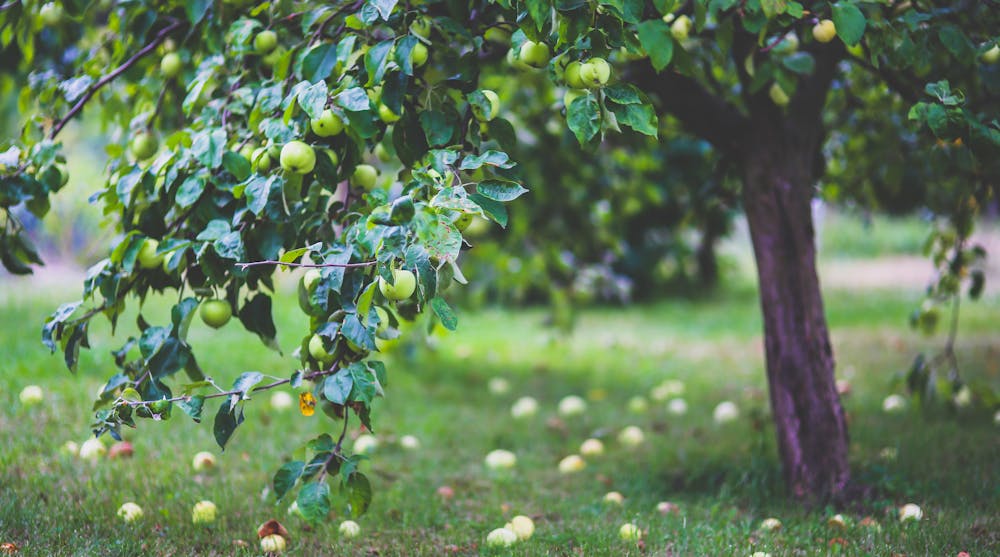
A small apple tree with many green apples

Planting a tree in your garden is a decision that can bring beauty, shade, and even fruit for generations. However, choosing the right tree depends largely on the size of your outdoor space. A towering oak might look majestic, but it will quickly overwhelm a small courtyard. On the other hand, a delicate Japanese maple may get lost in the vast expanse of a country estate. To ensure your tree thrives without outgrowing its welcome, you need to match its mature size to the available space.


The Many Benefits Of Planting A Tree

Planting a tree in your garden is about much more than just adding greenery. A well-chosen tree can enhance your outdoor space in numerous ways, from improving the environment to providing seasonal beauty and even producing edible rewards.

Aesthetic Value

A tree adds character and structure to a garden. Whether it’s the delicate blossoms of an ornamental cherry in spring, the fiery red foliage of an acer in autumn, or the elegant silhouette of a silver birch in winter, trees create a year-round visual impact. They can also be used to frame views, create shaded areas, and provide a focal point that enhances the overall design of the garden.

Personal Benefits

A tree can provide shade on hot summer days, act as a natural privacy screen, and even boost the value of your property. Fruit and nut trees offer the added benefit of homegrown produce, while some species, like lavender trees, can fill the air with pleasant fragrance. Additionally, trees can reduce noise pollution, making your outdoor space more tranquil and enjoyable.

Environmental Impact

Trees play a crucial role in maintaining ecological balance. They improve air quality, absorb carbon dioxide, and provide habitat for birds, insects, and other wildlife. Even a single tree can make a significant difference in an urban environment. Furthermore, trees contribute to soil stability, reducing the risk of erosion and improving water retention, which can be particularly beneficial in areas prone to drought.


Matching The Tree To Your Garden Size

The size of your garden will determine what type of tree you should plant. Trees grow at different rates and reach varying heights and widths at maturity. Choosing wisely ensures your tree will complement your garden without becoming a problem later on.

Consider Growth Rate And Mature Size

Some trees may start small but can reach enormous heights in a few decades. Always check the expected mature height and spread before planting. Fast-growing trees, such as willows and poplars, may not be suitable for confined spaces, while slow-growing ornamental trees can be ideal for small gardens. Understanding the space a tree will need in five, ten, or twenty years is crucial to maintaining harmony in your garden.

Root Systems Matter

The root system of a tree is just as crucial as its canopy. Large trees with aggressive roots, like sycamores and horse chestnuts, need plenty of room to spread. These can damage nearby foundations, patios, and drainage systems if planted too close to buildings. Compact trees with non-invasive roots are better for small and mid-size gardens. If you have underground pipes or a small space, choosing trees with shallow, non-spreading roots will help prevent future damage.

Soil And Sunlight Requirements

Different trees have different soil and light preferences. Some thrive in well-drained, sandy soils, while others prefer clay-heavy or acidic conditions. Before selecting a tree, consider the soil quality in your garden. Additionally, some trees require full sun to flourish, while others can tolerate partial or full shade. Matching the tree’s requirements with your garden conditions will ensure successful growth and longevity.


Best Trees For Small Gardens

Small gardens require compact trees that won’t outgrow their space. The best choices include ornamental trees with striking seasonal interest and fruit trees that provide an edible harvest. These trees should have a modest canopy and root system to avoid taking over the space.

Best Ornamental Trees

  • Japanese Maple (Acer palmatum) – A slow-growing tree with stunning autumn colours, perfect for patios and courtyards.
  • Crab Apple (Malus) – Produces beautiful spring blossoms and small decorative fruits that attract birds.
  • Silver Birch (Betula pendula ‘Youngii’) – A small weeping variety that adds elegance without taking up too much space.
  • Amelanchier (Juneberry) – Offers white spring flowers, edible berries in summer, and vibrant autumn foliage.
  • Ornamental Cherry (Prunus serrulata ‘Kanzan’) – A compact tree with a striking display of pink blossoms in spring.

Best Fruit Trees

  • Dwarf Apple Trees (Malus domestica ‘Pixie’ or ‘Red Windsor’) – Stay under 2.5m tall and provide delicious homegrown apples.
  • Cherry Trees (Prunus ‘Stella’ or ‘Sunburst’) – Self-fertile varieties that don’t require another tree for pollination.
  • Fig Trees (Ficus carica ‘Brown Turkey’) – Perfect for warm, sheltered spots, producing sweet figs.
  • Plum Trees (Prunus domestica ‘Opal’) – A small tree with high yields of delicious plums.

Best Trees For Mid-Size Gardens

A medium-sized garden allows for a greater variety of trees, including larger fruit trees and those that provide nuts or stunning seasonal colour.

Fruit And Nut Trees

  • Walnut (Juglans regia ‘Broadview’) – A compact variety ideal for producing delicious nuts.
  • Sweet Chestnut (Castanea sativa) – A medium-sized tree that produces edible chestnuts.
  • Pear Trees (Pyrus ‘Conference’ or ‘Williams’) – Hardy trees with beautiful blossoms and reliable fruiting.
  • Plum Trees (Prunus domestica ‘Victoria’ or ‘Czar’) – Easy to grow and produce heavy crops of fruit.

Ornamental And Shade Trees

  • Rowan (Sorbus aucuparia) – Offers white spring flowers, red autumn berries, and vibrant foliage.
  • Hawthorn (Crataegus monogyna) – A wildlife-friendly choice with spring blossoms and autumn berries.
  • Small-leaved Lime (Tilia cordata) – A beautifully shaped tree with fragrant summer flowers.

Best Trees For Large Gardens And Country Homes

If you have a spacious garden, you can plant large, long-lived trees that create a dramatic landscape while supporting local wildlife.

Large Heritage Trees

  • English Oak (Quercus robur) – A magnificent tree that supports countless species of birds and insects.
  • Beech (Fagus sylvatica) – Offers lush green leaves in summer and golden hues in autumn.
  • Horse Chestnut (Aesculus hippocastanum) – Famous for its conkers and impressive stature.
  • London Plane (Platanus x hispanica) – A tough, pollution-resistant tree suited for large gardens.
  • Sweet Gum (Liquidambar styraciflua) – Features striking autumn foliage with red, orange, and purple shades.

Final Thoughts

The right tree can transform a garden, whether it’s a tiny courtyard or a sprawling country estate. Choosing a species that suits your space ensures it will thrive for decades without causing maintenance headaches. With careful selection, any garden can enjoy the many rewards that trees bring.